Why study Religions and International Business?






 WhatsApp
Master / Doctorate: Religions and their influence on Global Business
Religions and Global Business -
Religious diversity
Religions and International Business
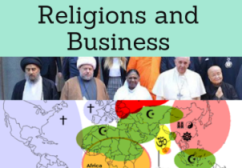
Despite the phenomenon of globalization, the trend towards regionalization is increasingly important. The different World's Religions (84% of humanity belong to some religion) define a series of economic areas that significantly influence on way of doing business, politics, culture, economic relations within each economic area as well as outlining the Interactions with other economic areas.
Religious contexts influence every aspect of global business, from consumer demand to labor policies and ethical frameworks. For example, Christianity drives holiday-based retailing, Islam drives Halal and Islamic financial markets, Hinduism shapes the vegetarian consumer landscape in India, Buddhism promotes sustainability, and Judaism influences niche markets. Companies that integrate religious sensitivity into their strategies (through local products, inclusive policies, and cultural training) gain competitive advantages, while mistakes can lead to financial and reputational losses.
Religious diversity influences labor policies and operational logistics. For example, religious calendars affect business operations. In Muslim-majority countries, Ramadan reduces work hours, impacting productivity and supply chains. In India, holidays like Diwali and Eid al-Adha cause temporary factory closures. Companies like Amazon adjust delivery schedules in these regions to account for these variations.
Religious norms influence workplace policies. For example, in Saudi Arabia, companies adhere to gender segregation and modest dress codes rooted in Islamic tradition. Multinationals like IKEA train their managers to respect these norms to avoid legal or cultural conflicts.
Related Doctorate, Masters and Courses offered by EENI Global Business School:

- Religious differences and ethical conflicts
- Religion and ethical frameworks
- Influence of religion on financial systems
Religions often prescribe or influence dress standards that reflect values such as modesty, cultural identity, or spiritual devotion.
religious diversity in the workplace can be a driver of inclusion and productivity if managed properly. Companies must implement clear policies, promote education, and ensure equity to reap the benefits of a diverse workforce. At the same time, they must navigate legal and operational challenges with sensitivity and pragmatism.
Any professional related to International Business must know, in addition to the fundamentals of Foreign Trade and global marketing, the pillars of these religions to understand how they influence both on business and on their respective economic area.
This knowledge will be essential to avoid intercultural clashes and to adapt the internationalization and International Marketing strategies to each economic area.
The Master / Doctorate in Religions and International Business focuses on analyzing the pillars of these religions, characteristics of the global economic areas, the main economic organizations and trade agreements related to each economic area.

Many of the most important businessmen and philanthropists of the world, openly declare their adherence to some religion.
Therefore, student will analyze the profiles of several businessmen and women of each of the studied religions, where the important influence onir beliefs in their businesses can be observed. Below are a summary of some businessmen analyzed.

Christian Businessmen (Catholics and Protestants)
Two of the richest businessmen in the world are Christians: Amancio Ortega (founder of Inditex, Catholicism, Spain) and Carlos Slim (Christian Maronite, Mexico).
Isabel dos Santos (the richest woman in Africa, Angola) or Folorunsho Alakija (the richest Nigerian woman) are Christian.
The American businessman Thomas Monaghan (founder of Domino Pizza, took the vows of poverty) is Catholic. The richest man in Colombia, Luis Sarmiento, is also Catholic.
African Christian Businessman, Businesswomen and Politics:
- Cheryl Carolus (South Africa)
- Divine Ndhlukula (Zimbabwe)
- Amini Kajunju (DR Congo)
- H.E. Nkosazana Dlamini-Zuma (South Africa)
- Ellen Johnson-Sirleaf (Liberia)
- Patrice Motsepe (South Africa)
- Cyril Ramaphosa (South Africa)
- Mike Adenuga (Nigeria)
- Theophilus Danjuma (Nigeria)
- Orji Uzor Kalu (Nigeria)
- Strive Masiyiwa (Zimbabwe)
- Sifiso Dabengwa (Zimbabwe)
American Christian Businesspeople.
- Antonio Moraes (Brazil)
- John Marinho (Brazil)
- Philip Anschutz (US, Presbyterian)
- Truett Cathy (US, Baptist)
- Ray Hunt (US, Methodist)
- Howard Ahmanson (US, Pentecostal)
- Steve Strang (US, Pentecostal)
Why study “Christianity and Business”?.
Orthodox businessmen
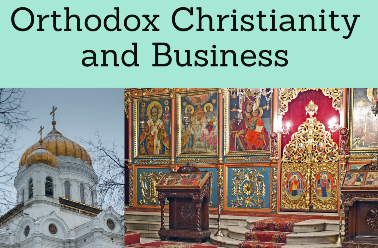
Vladimir Potanin, one of the largest Russian businessmen or the Egyptian entrepreneur Onsi Sawiris (founder of Orascom Group) are Orthodox Christians.
- Yelena Baturina (Russia)
- Alexander Lebedev (Russia)
- Nayla Hayek (Lebanon)
- Mimi Alemayehou (Ethiopia)
Why study “Orthodoxy and Business”?.
Muslim Businessmen
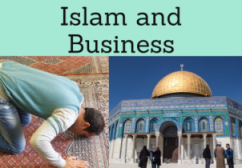
His Royal Highness Prince Al Waleed Bin Talal (one of the world's biggest investors, Saudi Arabia), Alhaji Aliko Dangote (the richest man in Africa, Nigeria), Mohamed Ibrahim (one of the most influential Africans in the world, Sudan), Yusuf Hamied (founder of one of the largest pharmaceutical laboratories in the world, India) or the Saudi Lubna Olayan (one of the most influential entrepreneurs in the world) are Muslims.
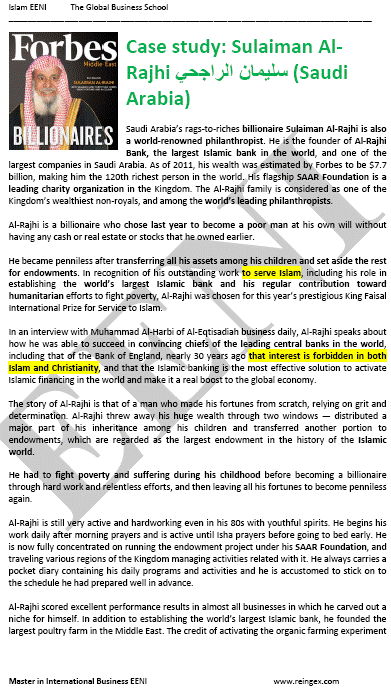
- Arab Businessmen and Businesswoman: Mohamed Al Jaber, Jawad Ahmed Bukhamseen, Nasser Al Kharafi, Yusuf Bin Ahmed Kanoo, Abdul Aziz Ghurair, Majid Al Futtaim, Mohammed Al-Barwani, Sulaiman Al-Rajhi, Lubna Bint Khalid Al Qasimi, Reem Ebrahim Al-Hashimi, Amina Al Rustamani, Shaikha Al Maskari, Hayat Sindi, Shaikha Al Bahar, Maha Al-Ghunaim, Hanan Al Kuwari, Randa Ayoubi, Ayah Bdeir, Minoush Abdel-Meguid
- African Muslim Businessmen and Businesswoman: Mohammed Al-Amoudi, Tarek Talaat Moustafa, Mohamed Mansour, Osama Abdul Latif, Mohamed Ali Harrath, Reginald Mengi, Ali Haddad, Othman Benjelloun, Alhaji Indimi, Miloud Chaabi, Adewale Tinubu, Anas Sefrioui, Mohamed Hassan Bensalah, Hassan Abdalla, Naushad Merali, Said Salim Bakhresa, Aziz Akhannouch, Ahmed Mekky, Abdulsamad Rabiu, Olufemi Otedola, Tunde Folawiyo, Mohammed Dewji, Hajia Bola Shagaya, Iman, Amina Odidi
- Asian Muslim Businessmen: Muhammad Abdul Mannan, Muhammad Yunus, Mian Muhammad Mansha, Salman Rahman, Dewan Farooqui, Sandiaga Salahuddin Uno, Tan Sri Mokhtar, Azim Premj, Islamic Revolutionary Guard, Bonyads
Sample: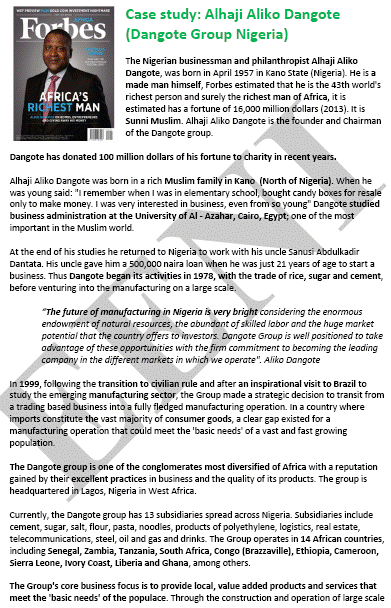
Why study “Islam and Business”?.

Hindu Businessmen
Important Indian entrepreneurs are Hindu (Hinduism): Shri Mukesh Ambani (Director of Reliance Industries, 3% of Indian GDP), Senapathy Gopalakrishnan (co-chair of Infosys, one of the largest technology enterprises in the world) or Kiran Mazumdar (founder of BIOCOM, the largest Indian biotechnology company).
Why study “Indian Religions and Business - Hinduism”?.

Buddhist Businessmen

Kazuo Inamori (founder of Kyocera and Buddhist monk, Japan) or Lee Kun-hee (president of Samsung, South Korea) are Buddhists.
- Kith Meng (Cambodia)
- Thaksin Shinawatra (Thailand)
- Padma Jyoti (Nepal)
Why study “Buddhism and Business”?.
Businessmen of other religions
Christianity, Islam, Hinduism (1,210 million Hindus) and Buddhism are considered the largest religions in the world (by the number of believers), but it is also necessary to know the profile of businessmen of other minority religions.
Zoroastrian businessmen
The Tata Group (has Western brands such as Jaguar or Land Rover, 3.2% of Indian GDP) belongs to a Zoroastrian family.
Sahu Jain, which controls the largest Indian communication group, is Jainist.
Corporations such as the Rotchild Group or Mastercard have hired Sikh managers due to their moral rectitude.
- Manmohan Singh (Former Prime Minister of India)
- Ajaypal Singh Banga
- Hardeep Singh
- Jogishwar Singh
Although Judaism only accounts for 0.2% of the world's population, its influence on International Business is very important. The South African business woman (Wendy Appelbaum), one of the largest entrepreneurs in Algeria (Issad Rebrab) or one of the richest bankers in the world (Joseph Safra, Brazil) are Jews.
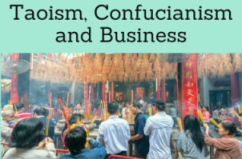
Confucian and Taoist Businessmen
The
Chinese businessman Zhang Ruimin (president of the Haier Group) is Confucian
The
Taiwanese businessman Chang Yung-fa (founder of the Evergreen logistics group) professes the I-Kuan Tao religion (based on Taoism, Confucianism and Buddhism).
Why study “Taoism, Confucianism and Business”?.
The Giving Pledge, the largest philanthropic initiative in the world was founded by the North-Americans: Bill Gates (founder of Microsoft) and Warren Buffett (one of the largest investors in the world), both agnostics.
Civilizations, religions and economic integration.
The economic areas analyzed are the following:
- Economic Area of African Civilization
- Hindu Economic Area
- Sinic Economic Area
- Buddhist Economic Area
- Islamic Economic Area
- Arab Economic Area
- Central Eurasian Economic Area
- Malay Economic Area
- Maghrebian Economic Area
- African Economic Area (belonging to African Civilization)
- Economic Integration of Islamic Civilization
- Interactions of Islamic Civilization
- Economic Area of Western Civilization
- Orthodox Economic Area
For each of these economic areas, the main Economic Organizations and trade agreements are analyzed in a summary form.
For example, for the East African Economic Area, the following regional Economic Organizations are analyzed briefly:
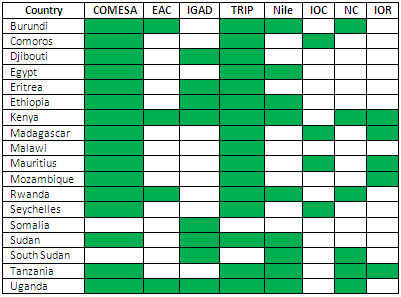
- Common Market for Eastern and Southern Africa (COMESA)
- East African Community (EAC)
- Intergovernmental Authority on Development (IGAD)
- Southern African Development Community (SADC)
- COMESA-EAC-SADC Tripartite
- Conference on the Great Lakes
- Indian-Ocean Rim Association
- Community of Sahel-Saharan States (CEN-SAD)
- Nile Basin Initiative
- Indian Ocean Commission (IOC)
- Economic Community of the Great Lakes Region
- Harmonization of Business Law in Africa (OHADA)
Free Trade Agreements related to East Africa:
- MERCOSUR-Egypt
- Agadir Agreement
- India-Mauritius Agreement
- East African Community-U.S. Agreement
- COMESA-U.S. Agreement
- Africa-EU Partnership
- US-Africa (AGOA)
- Islamic Trade Preferential System
In addition to the economic interactions with the rest of the world economic areas.
From the religious point of view, the training approach is neutral, that is, it is not based on the superiority of any religion or any type of proselytism, and that only through the knowledge of the pillars of these religions can they be respected and therefore be able to adapt regionally according to the characteristics of each economic area.
 Doctorat FOAD en éthique, religions et affaires
 Doctorado Online en Religiones y Negocios Internacionales
  Doutoramento EAD em Ética, Religiões e Negócios.
 Master en religions et affaires
Máster en Religiones y Negocios
Mestrado em Religiões e Negócios.
Master en religions et affaires
Máster en Religiones y Negocios
Mestrado em Religiões e Negócios.
(c) EENI Global Business School (1995-2025)
Top of this page
