
Mohammad Mannan (Muslim Banker)








 WhatsApp
Director of the Islamic Bank of Bangladesh, Sharia principles

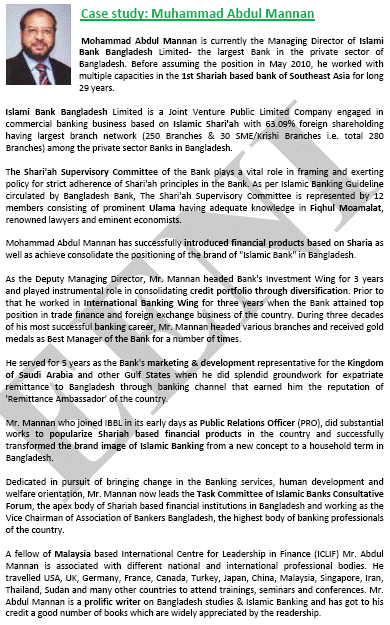
Mohammad Abdul Mannan (1952, Narayanganj) is the General Director of the Islamic Bank of Bangladesh, the largest private Bank in Bangladesh and the first Bank in Southeast Asia to apply the principles of Sharia and Islamic Economics. Before, he worked in various positions in the Bank.
Mohammad Abdul Mannan has successfully introduced financial products based on Sharia as well as works on Brand Positioning of the “Islamic Bank” in Bangladesh
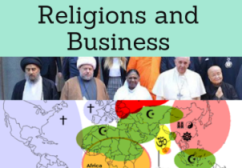
Religions and Global Business -
Religious diversity
- Muhammad Abdul Mannan (Bangladeshi Banker)
- Islamic Bank of Bangladesh
- Application of the principles of Islamic Economics and Sharia to the Islamic Bank of Bangladesh
Sample - Mohammad Abdul Mannan (Bangladeshi Banker)

The Subject “Mohammad Abdul Mannan (Bangladesh, Muslim)” is included within the curriculum of the following academic programs at EENI Global Business School:
Master: Religions & International Business, International Business.

Doctorate in Ethics, Religion & Business.

Languages:  or
or  Mohammad Abdul Mannan
  Mohammad Abdul Mannan
  Mohammad Abdul Mannan.
Currently; Mohammad Abdul Mannan leads the Task Committee of the Islamic Banks Consultative Forum
Muhammad Abdul Mannan, suggests that there are seven stages in the formulation and development of the Islamic Economics.
- He identifies three basic economic functions: consumption, production, and distribution, which are common to all systems
- These universal functions are governed by a set of principles, which must be consistent with Sharia (e.g., consumption moderation)
- Based on preceding it is necessary to define a theory that can synthesize all economic variables under Islamic values. This theory is dynamic; it can be modified over time
- Once defined the theory; it is necessary to set a range of goods and services necessary to achieve individual or group goals of society
- At this stage, there is a need to implement policy measures (Pricing policies, for example) taken in the previous step. It is necessary to have an institution that can adapt theoretical knowledge to measures required for the implementation of economic policy, based on the Sharia
- Evaluation
- Results
Muhammad Abdul Mannan (Muslim Businessman) belongs to the Central Eurasian Economic Area.
(c) EENI Global Business School (1995-2025)
Top of this page
