Course: Islam, Ethics and Business




 WhatsApp
Five pillars of Islam. Sharia. Zakat. Islamic Economic Areas (Course) Businesspeople
“There is no God but Allah, and Muhammad is his messenger.”
Islam, with 1.9 billion followers, dominates the Middle East, and parts of Africa and Asia, influencing business through practices that comply with Sharia law and cultural norms.
“To each of you We prescribed a law and a method. Had Allah willed, He would have made you one nation united in religion, but He intended to test you in what He has given you; so race to all that is good.” Holy Quran (5:48).
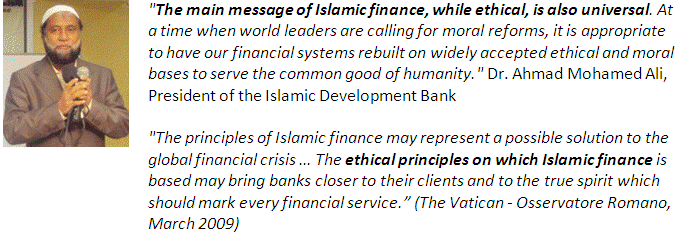
“The principles of Islamic Finance may represent a possible solution to the global financial crisis.” (Osservatore Romano).
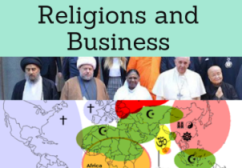
Religions and Global Business -
Religious diversity
The Professional Course “Islam, Ethics and Business” (15 ECTS) offered by EENI Global Business School consists of five modules:
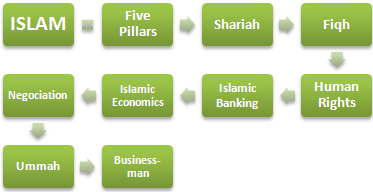
- Introduction to Islam (2 ECTS)
- Islam and Business (3 ECTS)
- Main Economic Organizations related to Muslim Countries (5 ECTS)
- Islamic Economic Areas (4 ECTS)
- Arab Development Funds (1 ECTS)
 Enrol / Request for Information
Languages: 
- Also available in For improving international communication skills, student has free access to the learning materials in these languages (free multilingual training).
 Islam
Islam  Islam
Islam  Islão
Islão
Intended for all those that want to specialize in all related aspects to Islam and Business.
- Credits: 15

- Duration: 15 weeks It is recommended to dedicate about twelve hours of study per week following a flexible schedule. It is possible to reduce the duration dedicating more hours a week
- Tuition Fees: EUR 360
- Open Online Enrollment
Sample: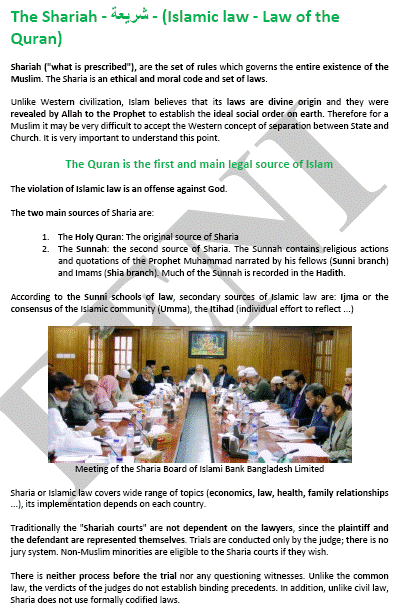
- To understand the pillars of Islam and its influence on business
- To analyze the main branches of Islam: Sunni and Shi'a
- To understand the ethical principles of Islam
- To study the distribution of Islam in the World
- To learn about fundamental role of Islam on Islamic Civilization
- To learn about the importance of the Zakat, Sharia (Islamic law) and Fiqh (Islamic jurisprudence) in Islamic Markets
- To understand the principles of Islamic Economics (finance, Islamic banks...)
- To identify the leading Islamic economic organizations (Arab League, Islamic Development Bank, Organization for Islamic Cooperation and the affiliated bodies...)
- To learn to design an intercultural negotiation for Islamic Countries
- To analyze the figures of main Muslim Businessman and Businesswomen
- To analyze the Islamic Economic Areas, economic integration processes and their relationships with other civilizations
- To understand the role of Islamic Countries in the Global Economy
- To analyze trade agreements between Islamic Markets and importance of the Trade Preferential System among the Member States of OIC (TPS-OIC)
- To understand role of the Arab Development Funds in expansion of Islamic Civilization
Download the Syllabus of the Course: “Islam, Ethics and Business” (PDF).
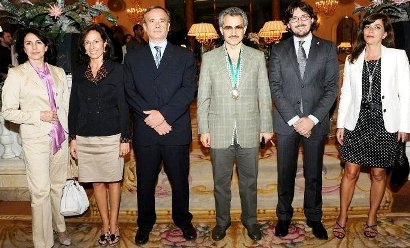
EENI delivers to His Royal Highness Prince Alwaleed bin Talal a Master Honoris Causa.
Why study the course “Islam, Ethics and Business”?.
Islam is currently the second religion in the world (1,900 million Muslims, 23% of humanity), being the religion with the fastest growing population in the world.
This Professional Course is aimed primarily at those enterprises and managers who wish to do business in the fifty-four countries where Islam is the majority religion. These “Islamic countries” make up the economic area of Islamic Civilization, composed of the Arab, Eurasian, Malay and Maghreb economic areas.
It also includes the economic areas of West and East Africa (although they belong to African Civilization) being Islam, Christianity and Traditional African Religions the main beliefs.
Anyone who does not belong to Islamic Civilization (Western, Hindu, Buddhist, Sinic...) should know the pillars of Islam and how they influence on way of doing business of “Islamic enterprises”, which can be very different compared to enterprises from other economic areas, thus avoiding intercultural conflicts.
The global Halal economy, which encompasses food, cosmetics, and pharmaceuticals, is estimated to reach $3.7 trillion by 2027 (Statista). Companies such as Nestlé and Unilever invest heavily in Halal certification, and Nestlé's more than 150 Halal products generated 10% of its revenue in MENA region (2024).
Ramadan Spending: Ramadan increases consumer spending by 20% to 30% in Muslim-majority countries (Euromonitor, 2024). Retailers such as Carrefour in the United Arab Emirates offer Ramadan-specific promotions, increasing sales by 25%.
Muslim millennials, who represent 50% of the global Muslim population (Pew, 2023), are driving demand for Halal fashion (a $400 billion market by 2026) and travel ($225 billion). Nike’s low-key active wear line for Muslim women boosted its sales in MENA region by 10% (2023).
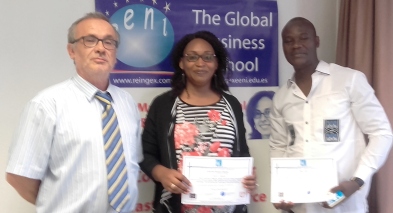
This course contains exercises that are evaluated, which the student must work out and pass to obtain the Diploma of the Professional Course: “Islam, Ethics and Business” granted by EENI Global Business School.
The course belongs to the following Higher Education Programs offered by EENI:
Masters: Religions & Business, Business in Africa, International Business
Doctorate: Ethics, Religions, and International Business, African Business.

Modules of the Course
Module 1- Introduction to Islam (2 ECTS)
- Introduction to Islam
- Prophet Muhammad
- Holy Quran
- Expansion of Islam
- The first schism of Islam: Sunnis and Shiites
- Introduction to Sufism
- Five pillars of Islam: Profession of Faith, Prayer, Charity (Zakat), Fasting, and Pilgrimage to Mecca
- Cairo Declaration on Human Rights in Islam
- Case Study: two prominent Arab Women
- Tawakkol Karman - Nobel Peace Prize (Yemen)
- Haifa Al-Mansour - Film Director (Saudi Arabia)
- Introduction to Arabic language
- The Ummah (Muslim Community) in...
2- Islam and Business (3 ECTS)
- Economic Impact of Zakat
- Sharia (Islamic Law)
- Fiqh (Islamic Jurisprudence)
- Islamic Economics
- Islamic Banking
- Islamic Marketing
- Islamic Consumer
- How to negotiate with the Muslim Countries
- Cultural Profiles of the Arab Countries. Patterns by country
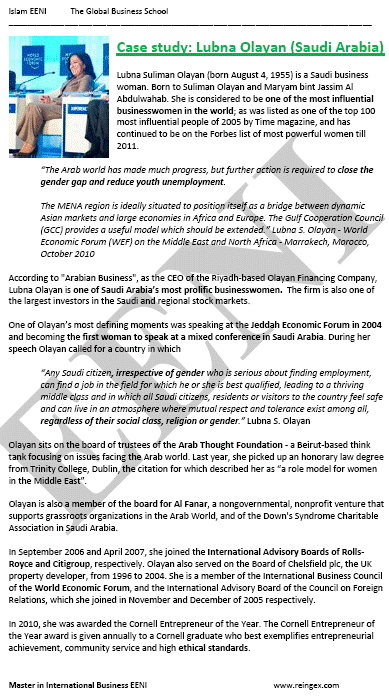
- Saudi Arabia: Lubna Olayan (one of the most influential businesswomen in the world), Hayat Sindi
- United Arab Emirates: Lubna Bint Khalid Al Qasimi (the most powerful Arab woman), His Excellency Reem Ebrahim Al-Hashimi, Amina Al Rustamani, Shaikha Al Maskari
- Kuwait: Shaikha Al Bahar, Maha Al-Ghunaim
- Qatar: Hanan Al Kuwari
- Jordan: Randa Ayoubi
- Lebanon: Ayah Bdeir
Arab Businessmen
- Saudi Arabia: His Royal Highness Prince Al Waleed Bin Talal (one of the largest investors in the world), Sulaiman Al-Rajhi (founder of one of the largest banks in the region, renounced to all his riches), Mohamed Al Jaber, Mohammed Al-Amoudi
- Bahrain: Yusuf Bin Ahmed Kanoo
- United Arab Emirates: Abdul Aziz Ghurair, Majid Al Futtaim
- Kuwait: Jawad Ahmed Bukhamseen, Nasser Al Kharafi
- Oman: Mohammed Al-Barwani
African Muslim Businesswoman
- Egypt: Minoush Abdel-Meguid
- Nigeria: Hajia Bola Shagaya (one of the richest women in Africa), Amina Odidi
- Somalia: Iman
African Muslim Businessmen
- Algeria: Ali Haddad
- Egypt: Hassan Abdalla, Tarek Talaat Moustafa, Mohamed Mansour, Ahmed Mekky
- Kenya: Naushad Merali
- Morocco: Othman Benjelloun (the richest man in Morocco), Anas Sefrioui, Mohamed Hassan Bensalah, Aziz Akhannouch, Miloud Chaabi
- Nigeria: Alhaji Aliko Dangote (the richest person in Africa), Alhaji Indimi, Adewale Tinubu, Abdulsamad Rabiu, Olufemi Otedola, Tunde Folawiyo
- Sudan: Mohamed Ibrahim (one of the hundred most influential people in the world), Osama Abdul Latif
- Tanzania: Reginald Mengi (from being born in a mud hut to being one of the biggest entrepreneurs in East Africa), Said Salim Bakhresa, Mohammed Dewji
- Tunisia: Mohamed Ali Harrath
Asian Muslim Businessmen
- Bangladesh: Muhammad Yunus (founder of the microcredit concept, banker and Nobel Peace Prize winner), Muhammad Abdul Mannan, Salman Rahman
- India: Azim Premj (third richest in India), Yusuf Hamied (founder of one of the largest generic laboratories in the world: vaccines for all at affordable prices)
- Indonesia: Sandiaga Salahuddin Uno
- Iran (enterprises): Bonyads (20% of the Iranian GDP), Islamic Revolutionary Guard
- Malaysia: Tan Sri Mokhtar
- Pakistan: Mian Muhammad Mansha, Dewan Farooqui
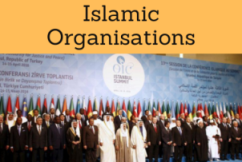
3- Main Economic Organizations related to Muslim Countries (5 ECTS)
- Arab League
- Greater Arab Free Trade Area (GAFTA)
- Organization of Islamic Cooperation
- Islamic Trade Preferential System
- Committee for Economic Cooperation
- Islamic Chamber of Commerce
- Islamic Centre for Development of Trade
- Economic Centre for Islamic Countries
- United Nations Economic and Social Commission for Western Asia (ESCWA)
- Islamic Development Bank
- Cooperation Council of Turkic Speaking States
- Asia-Middle East Dialogue
- Summit of South American-Arab Countries
- Afro-Arab Cooperation
- Africa-Turkey Partnership
- Indian-Ocean Rim Association (IORA)
- Asia Cooperation Dialogue
4- Islamic Economic Areas (4 ECTS)
- Introduction to Islamic Civilization
- Islamic Economic Areas:
- Arab Economic Area
- Central Eurasian Economic Area
- Maghrebian Economic Area
- Malay Economic Area
- African Economic Area (belonging to African Civilization)
- Main economic institutions related to Muslim Countries in Asia, Africa, the Middle East, and Europe
- Islamic Countries and Globalization
- Economic Integration of Islamic Civilization
- Major Free Trade Agreements related to Muslim Countries
- Interactions of Islamic Civilization
5- Arab Development Funds (1 ECTS)
- Arab Monetary Fund
- Arab Fund for Economic and Social Development
- Arab Trade Financing Programme
- OPEC Fund for International Development
- Abu Dhabi Fund for Development
- Saudi Fund for Development
- Arab Gulf Programme for United Nations Development Organizations
- Kuwait Fund for Arab Economic Development
- Arab Bank for Economic Development in Africa (BADEA)
In this subject; we will discuss Islam and the main features of Islamic Countries from the viewpoint of intercultural negotiation.
It is crucial to note that this subject has been written with a maximum and absolute respect for this religion, which has 1,900 million followers around the world.
After the 11-S, the International Businessman wishing to do business with Muslim Countries needs a closer approach to Islam and its culture as a premise to establish trusting relationships to develop long-term business. This is the main objective of this subject: to introduce Students to Islam and this interesting culture and therefore on their way of doing business.
- Muslim Population: 1.57 billion people (23% of the world's population)
- Only 15% of Muslims are Arabs (Middle East)
- 62% of the World's Muslim population lives in Asia and 20% in MENA region (Middle East and North Africa)
- 300 million Muslims live in countries where Islam is not the majority religion: China, India, or Russia
We also aim to break the negative topic that many Westerners have against Islam.
African Muslim Historians:
- Ali Al'amin Mazrui
- Hichem Djaït
- Sheikh Anta Diop
- Ahmadou Hampaté Bá
- Boubou Hama
- Pathé Diagne
- Djibril Tamsir Niane
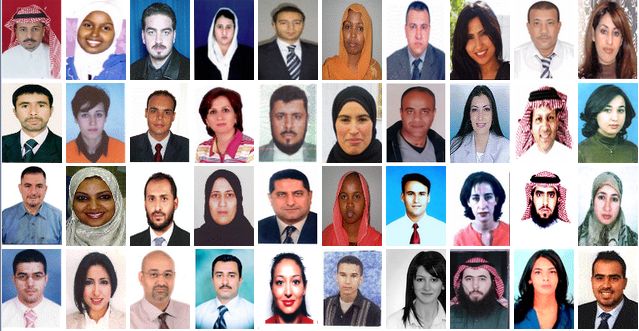
EENI - Middle East and Maghrebian Students:
(c) EENI Global Business School (1995-2025)
Top of this page
