Why study Islam, Ethics and Business?






 WhatsApp
Islam is the second religion in the world (23% of humanity, 1,900 million Muslims)
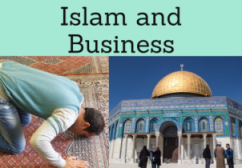
Islam is the second religion in the world (23% of humanity, 1,900 million Muslims), being the religion with the fastest growing population in the world.
This online educational program is aimed primarily at those managers and enterprises who wish to do business in the fifty-four countries where Islam is majority religion.

Religious diversity and geopolitical tensions
Understand differences between Sunnis and Shiites, importance of Ummah (Islamic community in Asia, India, ASEAN, Africa), function of Zakat, application of Sharia (Islamic Law), different schools of Fiqh (Islamic Jurisprudence), growth of the Islamic Banking and finance, principles of Islamic Economics, the role of Saudi Arabia as the central state of Islamic Civilization, the role of the Arab Development Funds for expansion of Islam, or the main Islamic Organizations (Organization for Islamic Cooperation, Islamic Development Bank, Arab League...) is necessary to understand the current Islamic civilization.
Therefore, this course is also recommended for anyone who wants to do business with enterprises in the Islamic economic area anywhere in the world or who wants to work in a company of Islamic origin.
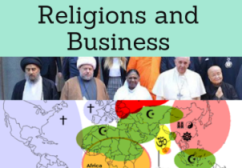
Religions and Global Business -
Religious diversity
Related Doctorate, Masters and Courses offered by EENI Global Business School:
- Doctorate (DIB): Ethics, Religions & International Business, African Business
- Masters (MIB): Religions & Business, Business in Africa
Why study the course “Islam, Ethics and Business”?
These “Islamic countries” make up the Islamic Economic Area composed by:
- Bahrain, Kuwait, Oman, Qatar, Saudi Arabia, and the Emirates (The six countries of GCC)
- Iraq, Jordan, Lebanon, Palestine, Syria, and Yemen
Central Eurasian Economic Area
- Afghanistan, Azerbaijan, Albania, Iran, Kazakhstan, Kyrgyzstan, Pakistan, Tajikistan, Turkmenistan, Turkey, and Uzbekistan
- Bangladesh and the Maldives are included in this economic area because of their growing economic integration in the region
Malay Economic Area
- Indonesia, Malaysia, and Brunei (the three ASEAN Muslim Countries and APEC members)
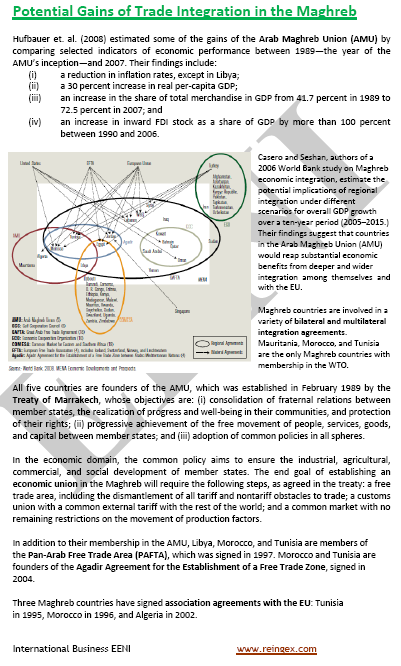
- Morocco, Mauritania, Algeria, Tunisia, and Libya (member countries of the Arab Maghreb Union)
Sample
It also includes the Western African Economic Area and the Eastern African Economic Area (although they belong to African Civilization) being Islam, Christianity and the African Traditional Religions the main beliefs. 489 million Africans are Muslims (47% of the African population).
Countries in the Western African economic area with a Muslim population over 50%: Burkina Faso (65%), Gambia (90%), Guinea Conakry (92%), Guinea-Bissau (50%), Mali (94%), Niger (96%), Nigeria (50%, the largest African economy), Senegal (95%) and Sierra Leone (65%).
Countries of the Eastern African Economic Area with a Muslim population over 50%:
- The Comoros (99%), Egypt (85%), Eritrea (50%), Somalia (100%), Sudan (80%), and Djibouti (99%)
- Countries with major Muslim minorities: Kenya, Mozambique, Tanzania, and Uganda
While Islam is lived differently in Asia, Africa or the Middle East, there is no doubt that influence of Islam is very important on the way of doing business, in personal relationships, between countries, in culture or in politics.
Anyone who does not belong to Islamic Civilization (Western, Hindu, Buddhist, Sinic...) should know the Five pillars of Islam and how they influence the way of doing business of “Islamic enterprises”, which can be very different compared to the enterprises from other economic areas, thus avoiding intercultural conflicts.
Sample: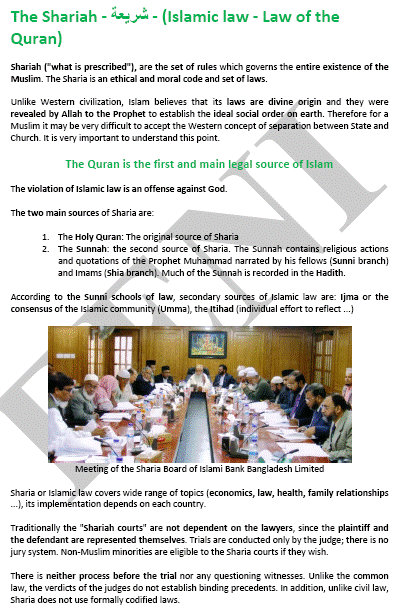
For example, a person from another Civilization, should understand that separation between Church and State, characteristic of the West, is not necessarily perceived in the same way by many Muslims. It is also necessary to know the implications of Human Rights in Islam (Cairo Declaration).
To better understand the influence of Islam on business, the profiles of several Muslim Businesspeople are analyzed, mainly from the Arab, Asian and African economic areas.
- Saudi Arabia: Lubna Olayan (one of the most influential businesswomen in the world), Hayat Sindi
- Kuwait: Shaikha Al Bahar, Maha Al-Ghunaim
- Qatar: Hanan Al Kuwari
- United Arab Emirates: Lubna Bint Khalid Al Qasimi (the most powerful Arab woman), His Excellency Reem Ebrahim Al-Hashimi, Amina Al Rustamani, Shaikha Al Maskari
- Lebanon: Ayah Bdeir
- Jordan: Randa Ayoubi
To understand increasingly important role of women in Islam, cases of Tawakkol Karman (Nobel Peace Prize, Yemen) and Haifa Al-Mansour (Film director, Saudi Arabia) will also be analyzed.
Arab Businessmen
- Bahrain: Yusuf Bin Ahmed Kanoo
- Kuwait: Jawad Ahmed Bukhamseen, Nasser Al Kharafi
- Oman: Mohammed Al-Barwani
- Saudi Arabia: His Royal Highness Prince Al Waleed Bin Talal (one of the largest investors in the world), Sulaiman Al-Rajhi (founder of one of the largest banks in the region, renounced all his riches), Mohamed Al Jaber, Mohammed Al-Amoudi
- United Arab Emirates: Abdul Aziz Ghurair, Majid Al Futtaim
African Muslim Businesswoman
- Egypt: Minoush Abdel-Meguid
- Nigeria: Hajia Bola Shagaya (one of the richest women in Africa), Amina Odidi
- Somalia: Iman
African Muslim Businessmen
- Algeria: Ali Haddad
- Egypt: Hassan Abdalla, Tarek Talaat Moustafa, Mohamed Mansour, Ahmed Mekky
- Kenya: Naushad Merali
- Nigeria: Alhaji Aliko Dangote (the richest person in Africa), Alhaji Indimi, Adewale Tinubu, Abdulsamad Rabiu, Olufemi Otedola, Tunde Folawiyo
- Morocco: Othman Benjelloun (the richest man in Morocco), Anas Sefrioui, Mohamed Hassan Bensalah, Aziz Akhannouch, Miloud Chaabi
- Sudan: Mohamed Ibrahim (one of the hundred most influential people in the world), Osama Abdul Latif
- Tanzania: Reginald Mengi (from being born in a mud hut to being one of the biggest entrepreneurs in East Africa), Said Salim Bakhresa, Mohammed Dewji
- Tunisia: Mohamed Ali Harrath
Asian Muslim Businessmen
- Bangladesh: Muhammad Yunus (founder of microcredit concept, banker and Nobel Peace Prize winner), Muhammad Abdul Mannan, Salman Rahman
- India: Azim Premj (third richest in India), Yusuf Hamied (founder of one of the largest generic laboratories in the world: vaccines for all at affordable prices)
- Indonesia: Sandiaga Salahuddin Uno
- Iran (enterprises): Bonyads (20% of Iranian GDP), Islamic Revolutionary Guard
- Malaysia: Tan Sri Mokhtar
- Pakistan: Mian Muhammad Mansha, Dewan Farooqui
For each of these Islamic economic areas, the main Economic Organizations, trade agreements, as well as the profile of each of Islamic Countries are analyzed in a summary form. In addition, the Economic Integration of Islamic Civilization, interactions between these economic areas and Interactions of Islamic Civilization will be analyzed.
Some Economic Organizations analyzed: Arab League, Islamic Development Bank, OIC, Preferential Trade Preferential System among the Member States of OIC (TPS-OIC), Islamic Chamber of Commerce and Industry, Afro-Arab Cooperation, GAFTA...
Note. This course does not analyze those countries where Islam is not the majority religion (such as China, India, or Russia).


(c) EENI Global Business School (1995-2025)
Top of this page
