
Subjects (Master in Transport in Africa)





 WhatsApp
Detailed content of the modules of the Master in Transport and Logistics in Africa
Detailed content of the Modules and subjects of the Master in Transport and Logistics in Africa offered by EENI Global Business School.
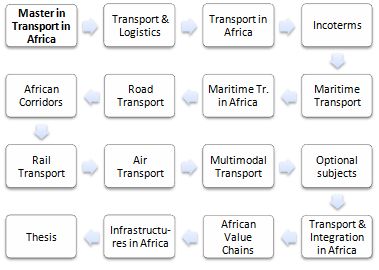
- Optional subjects of the Master in Transport and Logistics in Africa
- Download the syllabus (PDF) of the Master
- Download the syllabus (PDF) of the Related Subjects to Transport in Africa
ECTS = European Credit Transfer and Accumulation System
 Enrol / Request for Information


Subjects of the Master in Transport and Logistics in Africa.
Introduction to International Transport and Logistics (5 ECTS).
- International Logistics and International Trade
- Selecting a mode of International Transport
- Transport Documents related to International Trade
- International transport chain
- Authorized Economic Operator
- Costs and insurance of International Transport
- Export Packaging
International Federation of Freight Forwarders Associations (FIATA).
- Negotiable Combined Transport Bill of Lading (FBL)
- FIATA Multimodal Waybill FWB
- Electronic FIATA Bill of Lading
- Warehouse Receipt
- Forwarders Certificate of Receipt (FIATA FCR)
- Forwarders Certificate of Transport (FCT)
- International Convention for Safe Containers
- Customs Convention on Containers
- Convention Relating to Temporary Admission
The objectives of the subject “Introduction to International Transport and Logistics” are:
- To have a global vision of logistics and international transport applied to International Trade
- To understand the functioning of global transport chain
- To learn about different techniques of export packaging and the importance of containers
- To understand the basic concepts related to documents, costs and insurance of International Transport
- To analyze the main FIATA documents
Introduction to Transport in Africa (1 ECTS)
- Introduction to Transport in Africa
- African Regional Transport Infrastructure Network
- Economic costs of transport inefficiencies in Africa
- Forecast Demand for Transport in Africa
- African Transport Outlook 2040
- Case Study:
- Ethiopian Airlines, the Best Airline in Africa
- Bollore Logistics in Africa
The objectives of the subject “Introduction to Transport in Africa” are:
- To learn about global situation and trends of African transport
- To analyze the African Regional Transport Infrastructure Network
- To understand why transport inefficiencies make transportation costs in Africa more expensive
Incoterms® 2020 (2 ECTS)
- Introduction to Incoterms
- What are Incoterms® 2020?
- Key changes to Incoterms® 2020
- The Review of Incoterms® FCA (Free Carrier)
- The change from DAT (Delivered at Terminal) to DPU (Delivered at Place Unloaded)
- Different levels of insurance coverage under CIF and CIP
- Associated costs for each Incoterm (article A9 / B9)
- Analysis of Incoterms® 2020
- Incoterms® 2020 and international transport
- Incoterms® 2020 for sea and inland waterway transport: FAS (Free Alongside Ship) - FOB (Free On Board) - CFR (Cost and Freight) - CIF (Cost, Insurance & Freight)
- Incoterms® 2020 for any mode of transport: EXW (Ex Works) - FCA (Free Carrier) - CPT (Carriage Paid To) - CIP (Carriage and Insurance Paid to) - DAP (Delivered At Place) - DPU (Delivered at Place Unloaded) - DDP (Delivered Duty Paid)
- How are they used?
- Criteria for selection of Incoterms® 2020
The objectives of the subject “Incoterms® 2020” are the following:
- To understand the importance of Incoterms® 2020 in International Trade
- To know how Incoterms® 2020 are used in International Trade transactions
- To identify the risk, cost, and formalities according to the selected Incoterm
- To understand the responsibilities of the exporter and importer under Incoterms® 2020
- To know how to calculate export prices based on Incoterm
Maritime Transport (5 ECTS)
- Introduction to the Maritime Transport
- International Maritime Organization
- International Chamber of Shipping
- Regular lines and charters
- Freight and insurance of Maritime Transport
- Maritime Transport Agents
- Maritime Transport Documentation.
- Bill of Lading (B/L)
- Electronic FIATA Bill of Lading
- The largest ports of the world
- International Rules related to Maritime Transport
- Analysis of International Maritime Trade
The objectives of the subject “Maritime Transport” are the following:
- To understand the importance of Maritime Transport in Foreign Trade
- To learn about the functioning of Maritime Transport
- To understand the role of main institutions related to Maritime Transport (International Maritime Organization, International Chamber of Shipping)
- To learn about key players of Transport of Goods by Sea
- To learn about key concepts related to International Maritime Transport (freight, safety, stowage, risks...)
- To examine the different concepts related to the insurance and the main clauses of Maritime Transport
- To analyze the Maritime Transport documents (Bill of Lading) and how to fill them out
- To study the main rules and conventions of maritime cargo transport (Rotterdam, Hamburg, FAL Rules)
Download the syllabus (PDF) of the module.
Maritime Transport in Africa (3 ECTS)
1- Introduction to Maritime Transport in Africa.
- Revised African Maritime Transport Charter
- Durban Resolution on Maritime Safety, Maritime Security and Protection of Marine Environment in Africa
- Port of Lagos (Nigeria)
- Port of Abidjan (Ivory Coast)
- Port of Dakar (Senegal)
- Ports of Tema and Takoradi (Ghana)
- Port of Lomé (Togo)
- Port of Cotonou (Benin)
- Port of Douala (Cameroon)
- Port of Pointe Noire (Congo)
- Port of Luanda and Port of Lobito (Angola)
- Ports of Gabon
- Ports of Equatorial Guinea
- Port of Mombasa (Kenya)
- Port Sudan (Sudan)
- Port of Dar es-Salaam (Tanzania)
- Ports of Beira, Nacala and Maputo (Mozambique)
- Port of Djibouti
- Ports of Madagascar
- Egyptian ports
- Port of Durban (South Africa)
- Richards Bay, East London, Ngqura, Port Elizabeth, Mossel Bay, Cape Town, Saldanha
- Port of Walvis Bay (Namibia)
6- Maghrebian Ports.
The objectives of the subject “Maritime Transport in Africa” are:
- To learn about state of Maritime Transport in Africa
- To analyze the features of the largest ports in Africa
- To know how to access the fifteen African landlocked countries through transport corridors and ports
- To analyze the difficulty of Containerization, bottlenecks and high port costs in Africa
- To evaluate the disconnection between rail and road transport networks and African ports
Road Transport (10 ECTS)

- Introduction to Road freight transport
- International Road Transport Union
- Convention on the Contract on the International Carriage of Goods by Road
- Consignment Note (CMR)
- TIR Convention. TIR Carnet
- Insurance and costs of Road Freight transport
- Safe Load Securing for Road Transport
The objectives of the subject “International Road Transport” are the following:
- To understand the importance of Road Freight transport in International Trade
- To understand the role of International Road Transport Union (IRU)
- To learn the key concepts related to International Transport by road
- To learn about key players of Road Transport
- To study the main Conventions (CMR, TIR) of International Road Transport of goods
- To analyze the documents related to Transport of Goods by road (Consignment Note, e-CMR) and how to fill them out
- To know how stow safely a load to be transported by a lorry
Download the syllabus (PDF) of the module.
African Transport Corridors (3 ECTS)
- Introduction to African Transport Corridors
Trans-African Road Network
- Lagos-Mombasa Logistics Corridor
- Algiers-Lagos Logistics Corridor
- Cairo-Gaborone Logistics Corridor
- Cairo-Dakar Logistics Corridor
- Trans-Sahelian Highway (Dakar-N’Djamena Corridor)
- Tripoli-Windhoek Logistics Corridor
- Dakar-Lagos Logistics Corridor
- N’Djamena-Djibouti Logistics Corridor
- North-South Logistics Corridor
- Northern Logistics Corridor
- Central Logistics Corridor
- Beira-Lobito Logistics Corridor
- Lobito Logistics Corridor
- Asia-Africa Logistics Corridor
The objectives of the subject “African Transport Corridors” are:
- To learn about state of Road Freight transport in Africa
- To analyze the four types of corridors in Africa (unimodal, multimodal, logistic and economic)
- To learn about the characteristics of the main African transport corridors
- To identify the causes of the high costs of Road Transport in Africa
- To know how to access to African landlocked markets through transport corridors
- To understand the concept of a corridor as an engine of African socio-economic development
Rail Transport (5 ECTS)

- Introduction to the Rail freight transport
- Intergovernmental Organization for International Carriage by Rail. COTIF Convention (Rail)
- International Union of Railways
- International Rail Transport Committee(CIT)
- Organization for Cooperation between Railways (OSJD)
- CIM, CIT Rail Rules
- Costs and insurance of the Rail freight transport
- Rail Transport Document: CIM Consignment Note
- Economy and railway operations
- Introduction to African rail transport system
- Current state of the African railway infrastructure
- The need for the Rail Transport in Africa
- Analysis of the Railway Systems in Botswana, Tanzania, Zambia, Cameroon, Kenya, Madagascar, Morocco and Senegal
- The current situation of the African railway market
- Railway Business models in Africa
- Projects for new railways in Africa
Eurasian Rail Corridors:
- Introduction to the Eurasian rail cargo transport
- Trade volume distribution between the Northern and Southern routes
Combined Transport in Europe
- Rail/Road combined transport in Europe
- The European rail/road combined transport market
- General framework and key elements of Combined Transport in Europe
The objectives of the subject “International Rail transport” are the following:
- To understand the importance of Rail Transport in Foreign Trade
- To learn about pillars of international rail Transport Law
- To learn about key players of the Rail Freight transport
- To analyze the state of Rail Transport in Africa
- To explore the railway systems in Botswana, Tanzania, Zambia, Cameroon, Kenya, Madagascar, Morocco and Senegal
- To understand the role of international rail Transport Committee and the Intergovernmental Organization for International Carriage by Rail
- To analyze the documents related to Rail Transport (CIM Consignment Note)
- To study the main Conventions related to Rail Transport of goods (COTIF Convention, CIM)
Download the syllabus (PDF) of the module.
Air Transport (4 ECTS)
- Introduction to Air cargo transportation
- Single African Air Transport Market
- IATA
- International Civil Aviation Organization (ICAO). Chicago Convention
- Convention for the Unification of Certain Rules for International Carriage by Air
- Loading devices for Air Transport
- AWB Document (Air Waybill). e-AWB
- The global air transport market
- Main airports of the world
The objectives of the subject “Air Transport” are the following:
- To understand the importance of Air Transport in Foreign Trade
- To learn about the role of the International Civil Aviation Organization (ICAO) and the International Air Transport Association (IATA)
- To understand the global air cargo supply chain
- To analyze the documents related to Air Transport (Air Waybill, e-AWB)
- To study the main Conventions related to International Air Transport
- To learn about pillars of the Single African Air Transport Market
- To learn about global situation of the International Air Transport
Download the syllabus (PDF) of the module.
Multimodal / Combined Transport (5 ECTS)
- Introduction to Multimodal / Combined Transport
- Intermodal Loading Units (ILU)
- Intermodal Transport Chain
- Multimodal Transport Operator
- United Nations Convention on International Multimodal Transport of Goods
- United Nations Convention on Contracts for the International Carriage of Goods Wholly or Partly by Sea (Rotterdam Rules)
- Combined Transport Bill of Lading (CTBL) of FIATA
- Insurance and costs of Multimodal Transport
- Road-Rail Combined Transport
The objectives of the subject “Multimodal / Combined Transport” are the following:
- To understand the importance of the Multimodal/Combined Transport in Foreign Trade
- To learn the key concepts related to Multimodal Transport
- To analyze the Combined Transport Chain and its main actors
- To learn about role of FIATA (International Federation of Freight Forwarders Associations)
- To study the main Conventions related to Multimodal/Combined Transport
- To learn about features of Road-Rail Combined Transport
- To analyze the documents related to Multimodal/Combined Transport
Download the syllabus (PDF) of the module.
Transport and Regional integration in Africa (1 ECTS)
- Assessing Regional Economic Integration in Africa (ARIA)
- Transport and integration in the African regional economic communities (SADC, COMESA, UEMOA, CEMAC...)
- Transportation corridor initiatives
- Physical integration: road, rail and air transport
- Mainstreaming the African regional integration
- Harmonization of the Rules of Origin in Africa
- Intra-African Trade Facilitation programs
- Best practices in African regional integration
- Free movement of persons and right of establishment in Africa
The objectives of the subject “Transport and Regional integration in Africa” are the following:
- To study the level of transport integration in Africa
- To analyze the state of integration and transport in the different African economic communities
- To learn about programs on Trade Facilitation, rules of origin, market access... In the African continent
- To learn about the best practices related to African Regional Integration
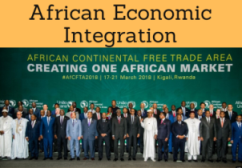
African Continental Free Trade Area.
- Introduction to the African Continental Free Trade Area
- The strategic importance for Africa of a Continental Free Trade Area
- Benefits of the African Continental Free Trade Area: increased intra-African trade and economic integration
- Evaluation of the economic impact of the African Continental Free Trade Area
- Potential scenarios to reach the African Continental Free Trade Area:
- Free Trade Zone of North and West Africa (CEDEAO, CEN-SAD, CEEAC and AMU)
- Free Trade Zone of Eastern and Southern Africa (COMESA, SADC, EAC, IGAD) - Tripartite Agreement
- Economic effects of a Continental Customs Union
The objectives of the subject “African Continental Free Trade Area (AfCFTA)” are:
- To understand the objectives and the state of the African Continental Free Trade Area
- To evaluate the advantages and the economic impact on African Markets of the African Continental Free Trade Area
- To analyze the two possible scenarios for the realization of the African Continental Free Trade Area
ICT for Regional Trade and Integration in Africa.
- Introduction to the Information and communications technology (ICT) for Regional Trade and Integration in Africa
- ICT Initiatives of the Regional Economic Communities
- E-Commerce: The next growth African frontier
- ICT and Trade Facilitation in Africa
- Automated Terminal Operating System
- Automated System for Customs Data and Management (ASYCUDA)
- Case Study:
- Kenya Ports Authority and Kilindini Waterfront
- Online Nigerian retail sites (DealDey, Konga, Jumia)
- National single window (NSW) in Ghana, Namibia, Malawi, and Mozambique
- ICT and logistics corridors
- African mobile revolution
- Cross-border mobile payments
The objectives of the subject “ICT for Regional Trade and Integration in Africa” are the following:
- To know how the information technologies can benefit the African regional integration, Trade Facilitation, African corridors and inter-African trade
- To analyze the concept of Electronic commerce as the next frontier of the African growth
- To learn about importance of cross-border mobile payments in Africa
- To study different successful cases of application of the ICT to Intra-African trade
African value chains:
- Introduction to African Value Chains
- African Growth Poles
- How can take advantage African enterprises of value chains?
- Trade Facilitation
- Rules of Origin and transport costs
- Export costs in Africa
- One-stop border post
- Case Study:
- Cocoa Value Chain in West Africa
- Shoprite (African largest food retailer)
The objectives of the subject “African value chains” are the following:
- To know how intra-African trade can benefit from African value chains
- To analyze the impact of African Value Chains on transport and export costs in Africa
- To assess the importance of the One-stop border post in Africa
- To study success stories of African Value Chains (Egyptian textile sector, cocoa value chain in West Africa...)
Infrastructures in Africa
- Introduction to Infrastructures in Africa
- Analysis of infrastructures in Africa
- Institutional framework
- Infrastructure Consortium for Africa
- African Infrastructure Knowledge Programme
- Trends in Infrastructure Investments in Africa
- Infrastructure and economic growth in Africa
- African Regional Integration and infrastructures
Programme for Infrastructure Development in Africa
- Introduction to the Programme for Infrastructure Development in Africa (PIDA): development through regional integration
- Key sectors of the Programme for Infrastructure Development in Africa: Transport, Energy, ICT and Transboundary Water Resources
- Costs and investments of the Programme for Infrastructure Development in Africa
Road Infrastructure Costs in Africa
- Introduction to road infrastructure costs in Africa
- Analytical Approach for the African Road Infrastructure Costs
- Unit Cost Curve by Project Size
African Road Safety Action Plan
- Introduction to the African Road Safety Action Plan
- The Five pillars of the African Road Safety Action Plan
- Road Safety Management
- Safer roads and mobility
- Safer vehicles
- Safer Road Users
- Post-crash response
- Introduction to AI in Global Business
- AI Technologies and Tools for International Business
- AI and Global Trade
- AI in Global Strategy and Decision-Making
- AI in Global Supply Chain Management
- AI in International Marketing and Customer Insights
- AI and Cross-Cultural Management
- AI in Global Finance and Risk Management
- Ethical and Regulatory Considerations in Global AI
- Global Ethics
- AI for Sustainability in International Business
- Future Trends in AI & International Business

Digital Trade and Cross-Border E-Commerce
 Master in transport en Afrique
  Master en Transporte en África
  Mestrado em
Transporte na África.
Mestrado em
Transporte na África.
(c) EENI Global Business School (1995-2025)
Top of this page
