
ICT, Trade and Integration in Africa





 WhatsApp
Information and communications technology (ICT) for Regional Trade and Integration in Africa
Intensive use of information and communications technology (ICT) can reduce export and logistics costs of Intra-African Trade, especially for landlocked developing African countries and can reduce corruption.
- All players participating in African value chain (Governments, agencies, Importers, exporters, customs agencies, logistics enterprises, banks...) can take advantages of ICT applied to inter-African trade
- Standardization of Customs Clearance System in Africa is necessary and is one of the objectives of the African Continental Free Trade Area (AfCFTA)

- Introduction to the Information and communications technology (ICT) for Regional Trade and Integration in Africa
- E-Commerce: The next growth frontier of Africa
- ICT Initiatives of Regional Economic Communities (REC)
- Case Study: Online Nigerian retail sites (DealDey, Konga, Jumia)
- ICT and Trade Facilitation in Africa
- Automated System for Customs Data and Management (ASYCUDA)
- Case Study:
- Kenya Ports Authority and Kilindini Waterfront
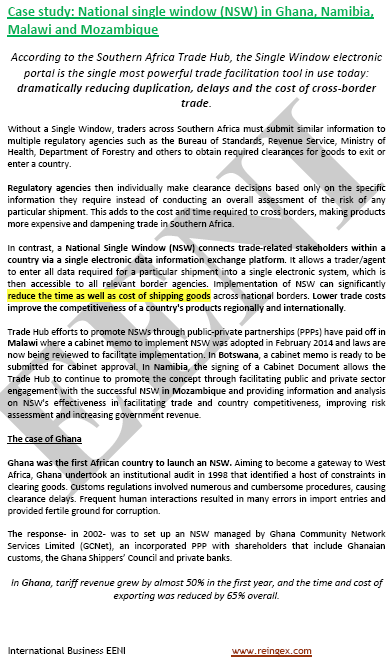
- National single window (NSW) in Ghana, Namibia, Malawi, and Mozambique
- Automated Terminal Operating System
- ICT and logistics corridors
- ICT and payment systems
- Cross-border mobile payments
- East African Payment System (EAPS)
Sample - ICT for Regional Trade and Integration in Africa:

The educational aims of the Subject “ICT for Regional Trade and Integration in Africa” are the following:
- To know how ICT can benefit African regional integration, Trade Facilitation, inter-African trade and African corridors
- To analyze the concept of Electronic commerce as the next frontier of African growth
- To learn about importance of African cross-border mobile payments
- To study different successful cases of application of Information and communications technology to Intra-African Trade

The Subject “ICT for Trade and Integration in Africa” is included within the curriculum of the following academic programs at EENI Global Business School:
Masters: Transport in Africa, Business in Africa

Doctorate: Global Logistics, African Business.

Languages:  or
or  TIC, Commerce intra-africain et intégration
  TIC: comercio e integración en África
  TIC: comércio intra-africano e integração.
- Kenya, Senegal, and South Africa are good examples of customs automation (paperless trade)
- Ghana, Namibia, Malawi or Mozambique are real cases of National single windows development
- Implementation of the National single window in Ghana has reduced exporting cost and time by 65%
- One obstacle to intensive use of these technologies is poor interconnectivity and long distances in Africa
- In general, Information and communications technology (ICT) framework for e-commerce is not developed in Africa
- The traditional lack of trust of the African consumer is more serious and complex in the digital world
- In Nigeria; we can observe an
e-commerce boom.
- Several Online Nigerian retail sites (DealDey, Konga, Jumia) are leading e-commerce initiatives in West Africa
- E-Commerce sales doubled last year (about 382 million dollars), generating more than six million jobs
- According to AT Kearney, in Africa South of Sahara, there were 650 million mobile users (2011), the so-called “African mobile revolution”
- The African Development Bank estimates that Information and communications technology (ICT) contributes to 7% of GDP in Africa
- Economic Community of West African States (ECOWAS), Southern African Development Community (SADC) and EAC (East African Community) are developing outstanding ICT projects related to intra-regional trade
- Ahmed Mekky is one of the leaders of telecommunications sector in MENA region
(c) EENI Global Business School (1995-2025)
Top of this page
