Business in Pakistan, Islamabad, Karachi




 WhatsApp
Pakistani Foreign Trade, Logistics. Business in Lahore (Pakistan) Automotive Sector
Pakistan is a Frontier Market
The Islamic Republic of Pakistan is advantageously situated in Central-South Asia
Pakistan is a Next Eleven Economy with major economic and political challenges
Pakistan has made significant economic reforms mainly in the manufacturing sector and financial services, but the outlook for economic growth in the Islamic Republic of Pakistan is not optimistic
Pakistan is a democratic Parliamentary Federal Republic with Islam as the state religion
- Introduction to the Islamic Republic of Pakistan (Central Asia)
- Economy of Pakistan
- International Trade of Pakistan
- Top Pakistani Exports: products and markets
- International Trade Development Authority of Pakistan
- Investment in Pakistan
- Sales promotion in Pakistan
- Doing Business in Karachi, Islamabad, and Lahore
- Transport and Logistics
- Case Study:
- Pakistani Information Technology Industry
- Pakistani Automotive Sector
- Hinopak Motors
- Pakistan Telecommunication
- Chawla Group
- Case Study - Pakistani Muslim Businessman:
- Shahid Khan
- Saigol Family
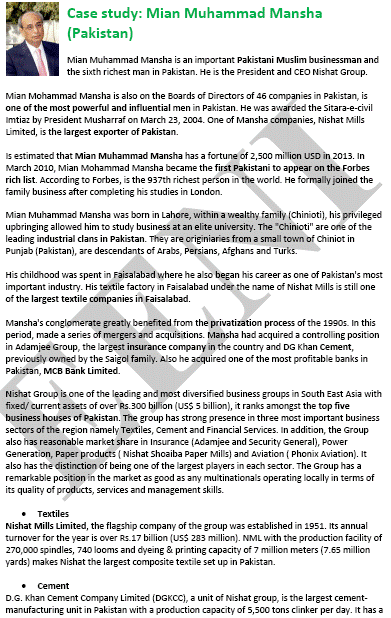
- Mian Muhammad Mansha
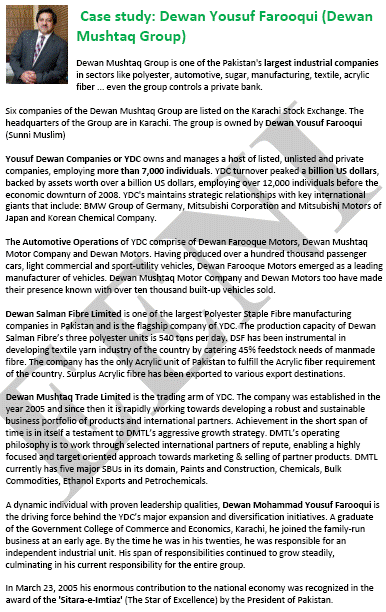
- Dewan Farooqui
- Access to the Pakistani market
- Business Plan for Pakistan

The educational aims of the Subject “Foreign Trade, Logistics and Business in the Islamic Republic of Pakistan” are:
- To analyze the Pakistani Economy, Logistics and Foreign Trade
- To conduct research on business opportunities in the Islamic Republic of Pakistan
- To explore the Pakistani trade relations with the student's country
- To learn about Pakistani Trade Agreements
- To examine the profile of Pakistani enterprises and Businessman
- To develop a business plan for the Pakistani market
The Subject “Foreign Trade, Logistics and Business in Pakistan” is included within the curriculum of the following academic programs at EENI Global Business School:
Masters: International Business, Foreign Trade.
Masters adapted to the  Pakistani Students.
Languages:  (or
(or  Pakistan
  Pakistán
  Paquistão).
- Subject Credits “Doing Business in Pakistan”: 2

International Trade, Logistics and Business in Pakistan.
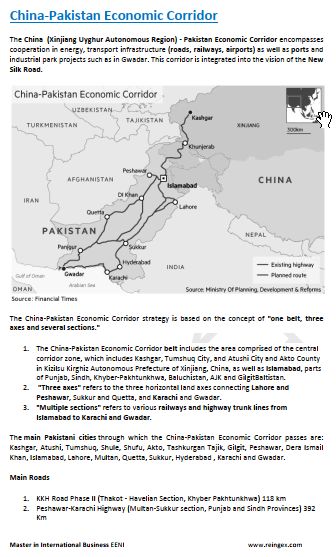
- China-Pakistan Logistics Corridor
- Islamabad-Istanbul Logistics Corridor
- Almaty-Bishkek Logistics Corridor
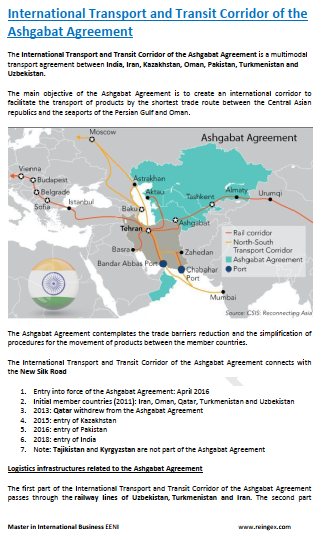
- Corridor of the Ashgabat Agreement
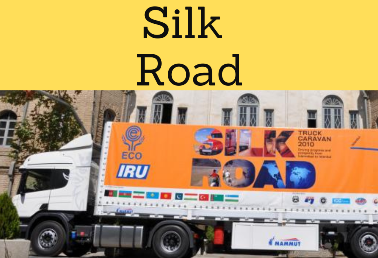
- Silk Road
- Access to:
- Transport Corridor Europe-Caucasus-Asia (TRACECA)
- Trans-Caspian Corridor
- China-Central-West Asia Economic Corridor
- India-Chabahar (Iran)-Afghanistan Economic Corridor
- International North-South Transport Corridor (India-Russia)
- Kyrgyzstan-Iran Corridor
Pakistani Preferential Access and Trade Agreements:
- Pakistan and the Central Eurasian Economic Area
- Economic Cooperation Organization (ECO)
- South Asian Association for Regional Cooperation
- Asian Clearing Union
- Central Asia Cooperation (CAREC)
- Shanghai Cooperation Organization
- Islamic Trade Preferential System
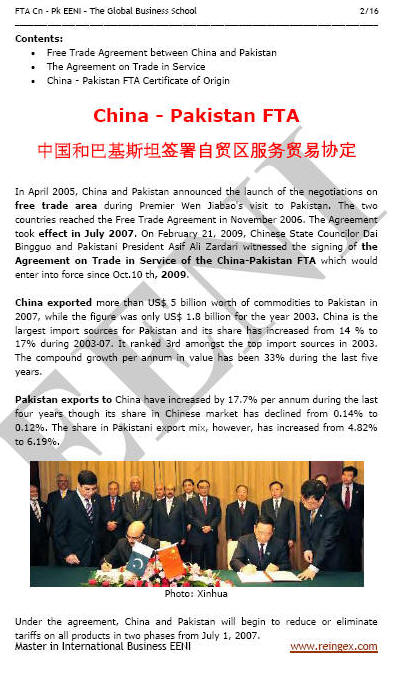
- Pakistan-China Free Trade Agreement
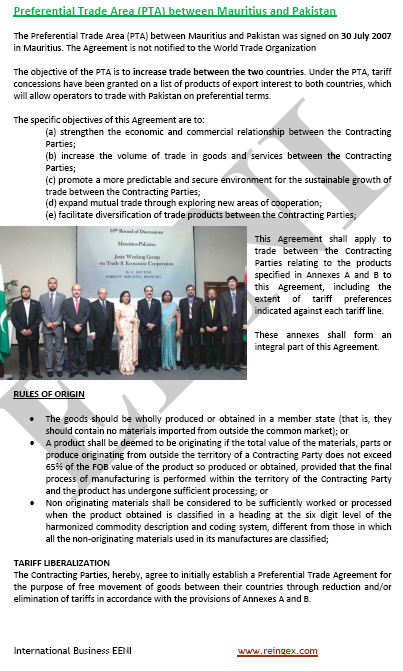
- Mauritius-Pakistan Preferential Trade Area
- ASEAN-Pakistan Free Trade Area
- Pakistan-Sri Lanka Agreement
- Trade Agreements with India, MERCOSUR
- Global System of Trade Preferences
- Trade Negotiations Among Developing Countries
- Iran-Pakistan-Turkey Transit Transport Framework Agreement (TTFA)
- Indonesia-Pakistan Agreement
- Pakistan-Malaysia Agreement
- European Union-Pakistan
- European Union-Pakistan Cooperation Agreement
- EU's Generalized System of Preferences (GSP)
- ALADI (observer)

- World Trade Organization (WTO)
- Agreement on Trade in Services (GATS)
- Agreement on Sanitary Measures
- Agreement on Technical Barriers to Trade
- Agreement on Preshipment Inspection
- Agreement on Safeguards
- Trade Facilitation Agreement
- World Customs Organization (WCO)
- Kyoto Convention
- CIM, CIT Rail Rules
- International Road Transport Union (IRU)
- TIR Convention
- Guidelines on Safe Load Securing for Road Transport
- Hamburg Rules (Maritime Transport)
- COTIF Convention
- BIC
- Chicago Convention (ICAO)
- International Maritime Organization (IMO)
- Convention for Safe Containers
- Istanbul Convention
- Customs Convention on Containers - not a member
- Islamic Development Bank
- Organization of Islamic Cooperation (OIC)
- Asia-Middle East Dialogue
- Asian Development Bank
- Colombo Plan
- Africa-Asia Partnership
- Boao Forum for Asia
- Asia Cooperation Dialogue
- Economic Commission for Asia (ESCAP)
- United Nations
- World Bank
- World Trade Organization (WTO)
- International Monetary Fund
The Islamic Republic of Pakistan.
- Borders of Pakistan: Afghanistan, Iran, India, and China
- Pakistani Population: 199 million people
- Area of Pakistan: 881,913 km²
- Capital of Pakistan: Islamabad
- The largest city of Pakistan is Karachi
- Pakistani official languages are Urdu (official) and English (co-official)
- Other languages: Punjabi, Pashto, and Sindhi
- Currency of Pakistan: Pakistani Rupee (PKR)
- Independence of Pakistan from the United Kingdom: 1940
- Abolition of Slavery in Pakistan: 1992 (the last country in the World to abolish slavery)
Religion in Pakistan.
Islam is the state religion of the Islamic Republic of Pakistan, most of 199 million Pakistani (95-97%) are Sunni Muslims, and Shiites represent 5% of the population, the second country after Iran.
- Most Muslims in Pakistan follows the Madhhab Hanafi school of Islamic Jurisprudence
- In 1979 the new penal measures based on the Islamic principles of law (Sharia) entered into force (establishing a social welfare system based on the Zakat)
- Only Muslims have the right to act as judges in the Federal Court of Sharia
- The Headquarters of the Islamic Chamber of Commerce and Industry are in Pakistan
- Hinduism: 1% of the population (3.6 million)
Pakistan belongs to the Central Eurasian Economic Area (Islamic Civilization).
Economy of Pakistan.
- The Automotive sector of Pakistan (32 automotive manufacturing units) is one of the largest contributors to the manufacturing sector in Pakistan (growth of 30% annually)
- The Textile industry of the Islamic Republic of Pakistan is the largest driver of export growth
- International Trade Development Authority of Pakistan is the agency of the Government of Pakistan working for Foreign Trade promotion of Pakistan
- Access to the Eurasian Land Transport Initiative (Silk Road)
Shahid “Shad” Khan (Pakistan, 1952) is a prominent billionaire Businessman living in the United States. He is the owner of the Jacksonville Jaguars and Flex-N-Gate (auto components manufacturer).
The Saigol Family (from India) established the first textile unit “Kohinoor Textile Mills” under the umbrella of Kohinoor Industries Limited.
International Trade and Business in Pakistan:
(c) EENI Global Business School (1995-2025)
Top of this page
