African Traditional Religions and business






 WhatsApp
African Ethics: Balance between Humans, Nature and the Spiritual
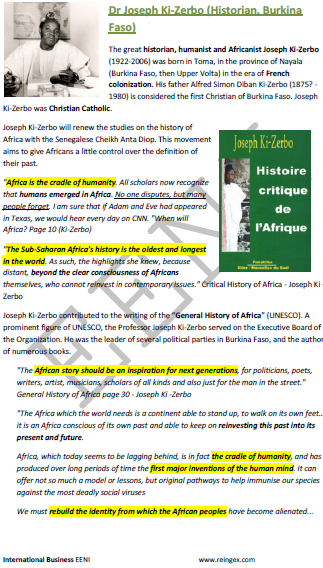
“Africa, the cradle of humanity has a history and gave birth to History” Joseph Ki-Zerbo
African traditional religions are a diverse set of spiritual beliefs and practices indigenous to the peoples of Africa, which vary widely across ethnicities, regions, and cultures. There is no single “African religion,” but rather multiple belief systems that share certain common traits.
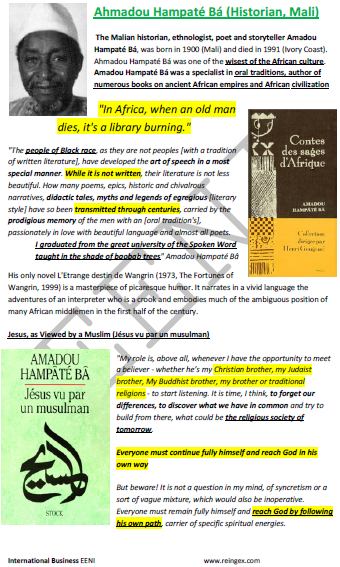
“In Africa, when an old man dies; it is a library burning” Ahmadou Hampaté Bá (Malian Historian)
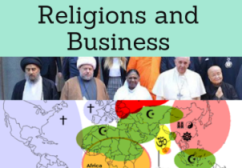
Religions and Global Business -
Religious diversity
Main features:
1. Spiritual worldview:
- They believe in a supreme or creator God (such as Olodumare among the Yoruba or Nyame among the Akan), although this God is often distant and is interacted with through lesser deities, ancestors, or spirits.
- The ancestors occupy a central place, venerated as mediators between the living and the divine.
- Nature (mountains, rivers, animals) and the associated spirits are fundamental, reflecting a deep connection with the environment.
2. Practices and rituals:
- They include initiation ceremonies, rites of passage (birth, marriage, death), sacrifices, offerings, and divination.
- Music, dance, and drums are essential in rituals to invoke spirits or connect with the sacred.
- The fortune tellers Griots, shamans or spiritual leaders (such as babalawos in the Yoruba tradition) interpret divine will or resolve conflicts.
Regional diversity:
- West Africa: Traditions such as the Yoruba religion (with orishas like Shango or Yemayá) or the Vodun religion in Benin and Togo, which influenced New World practices such as Haitian voodoo or Cuban Santeria.
- Central and Southern Africa: The Bantu worship ancestors and believe in protective spirits (such as the Nganga in the Congo).
- East Africa: The Maasai and other peoples integrate beliefs in nature spirits and a celestial god, such as Enkai.
Syncretism:
Many traditional religions have blended with Christianity, Islam, or colonial influences, giving rise to syncretic practices. For example, Candomblé in Brazil combines Yoruba elements with Catholicism.
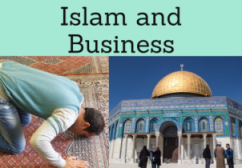
- Islam in Africa
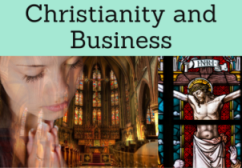
- Christianity in Africa
5. Values and community:
- The emphasis is on community harmony, respect for elders, and connection to the cycles of life.
- Morality is based on maintaining balance between humans, nature and the spiritual..
- Sheikh Anta Diop
- Bethwell Allan Ogot
- Ali Al'amin Mazrui
- Théophile Obenga
- Elikia M'Bokolo
- Boubou Hama
- Jacob Festus Adeniyi Ajayi
- Hichem Djaït
- Akin Mabogunje
- Pathé Diagne
- Christophe Wondji
- Albert Adu Boahen Kwadwo
- Djibril Tamsir Niane
Ejemplo:
Master in International Business in Burkina Faso
Las African Traditional Religions and los negocios
African Traditional Religions and Business
African Traditional Religions (ATRs), although often marginalized in global business discourse, play a significant role in how business is done in different regions of Africa and also in the diaspora.
Impact on the local business world
- Trust and legitimacy: Business decisions are often legitimized by traditional leaders or rituals. In Africa, Coca-Cola partners with Christian and Muslim clerics.
- Community Business Ethics: African traditional religions prioritize group well-being over individual gain, influencing local cooperative practices and partnerships.
- Opening rituals: Before opening a business, starting a market or a project, blessing ceremonies are performed in some communities.
- Conflict management: Traditional resolution mechanisms, based on elders or community councils, are still used in business contexts.
In the global business context
- Interculturality: Understanding African traditional religions is key for foreign companies to establish relationships of trust with African communities.
- Sustainability: Many of these religions emphasize a harmonious relationship with nature, which aligns with modern Corporate Social Responsibility (CSR) and ESG practices.
- Leadership and decision-making: The influence of religious or traditional leaders can be decisive in negotiations with international companies.
- Spiritual economy: markets linked to traditional practices (art, traditional medicine, spiritual tourism) emerge, which enter into global chains.
African traditional religions are not only a spiritual aspect, but also a cultural and ethical framework that shapes how business is done in Africa. In a global context, they represent both a challenge for intercultural understanding and an opportunity for more humane and sustainable business practices.
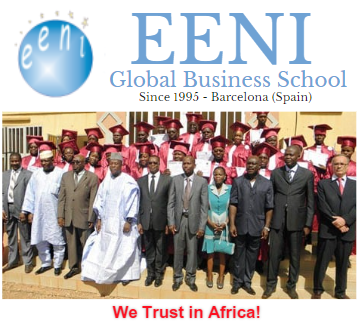
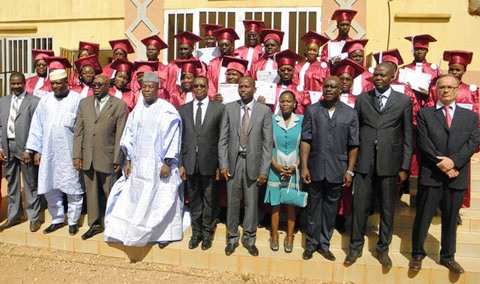
Clément Lonfo and Christelle Yameogo (Burkina Faso) receiving the diploma of the Master in International Business at EENI headquarters:

Gold Mining in Ghana and the Influence of African Traditional Religions
Ghana is one of the world's leading gold producers. Many multinational companies from Canada, South Africa, Australia, and China invest in mining projects in the country. However, in various mining communities, traditional religions play a key role in the acceptance or rejection of these projects.
In the Ashanti region, before beginning mining operations, a Canadian company planned its operations without consulting traditional leaders or performing culturally legitimizing rituals. The area where the mine was located was considered sacred land, inhabited by protective spirits according to the local worldview.
The elders and traditional priests (fetish priests) claimed that the project violated the spiritual balance of the community
Resolution
The company hired cultural advisors and established a dialogue with traditional leaders.
Actions taken:
- Ritual ceremonies of reconciliation with the land, financed by the company.
- Community agreements: construction of schools and clinics in the area.
- Incorporation of traditional leaders into environmental and social oversight committees.

- Cross-Cultural Management
- Cultural influence of religion in global business
- Religious differences and ethical conflicts

The subject «African Traditional Religions and business» is included within the curriculum of the following academic programs at EENI Global Business School:
Masters: Religions & Business, Business in Africa

Doctorate: Ethics, Religions & Business, African Business

Languages:  or
or  Religiones tradicionales africanas
  religions traditionnelles africaines
  Religions.
(c) EENI Global Business School (1995-2025)
Top of this page
