
Impact of Trade Agreements on Global Marketing







 WhatsApp
International Marketing & Trade Agreements. Case Study: Dangote Cement (Africa)

Global Marketing and the Role of Trade Agreements
Global Marketing refers to the process of planning, producing, placing, and promoting products or services across multiple international markets. To succeed in diverse global environments, businesses must:
- Understand Cultural and consumer differences (e.g., language, values, buying behavior)
- Adapt Pricing, packaging, and Product Positioning to align with local market expectations and preferences
- Navigate legal and regulatory frameworks including advertising laws, product standards, and import/export restrictions
- Develop cross-border brand strategies that balance global consistency with local relevance
An essential external factor influencing global marketing strategies is the presence of trade agreements.
Trade agreements are formal treaties between countries that define the rules of trade, aiming to reduce barriers, harmonize regulations, and promote economic cooperation. They directly impact global marketing by:
- Opening access to new markets through reduced entry Restrictions
- Lowering tariffs and duties, making products more competitively priced
- Standardizing regulations such as labeling, safety standards, and packaging requirements
- Encouraging Foreign Direct Investment (FDI), Joint Ventures, and Strategic Alliances
Together, global marketing practices and trade agreements shape how companies expand internationally, enabling more efficient, culturally sensitive, and legally compliant entry into global markets.
Case Study (Summary): Dangote Cement Plc: Leveraging Trade Agreements for Regional Market Expansion
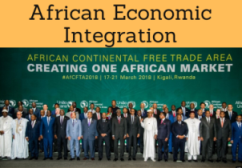
Dangote Cement Plc, Sub-Saharan Africa’s largest cement producer, strategically leverages regional and continental trade agreements to expand its market footprint and promote cement and clinker self-sufficiency across West and Central Africa. The company actively capitalizes on the African Continental Free Trade Area (AfCFTA) and the Economic Community of West African States (ECOWAS) agreements to implement its “export to import” strategy. This approach enables Dangote to harness Nigeria’s abundant limestone reserves to produce and export cement and clinker to neighboring countries—particularly coastal states lacking domestic limestone deposits, which have historically depended on imports from outside the continent. Through this strategy, Dangote not only strengthens intra-African trade but also contributes to reducing Africa’s reliance on extra-regional supply chains, fostering greater industrial integration and regional value creation.

The Subject “Impact of Trade Agreements on Global Marketing” belongs to the following Programs offered by EENI Global Business School:
Masters: Foreign Trade, International Business.

Diploma: International Marketing.


Languages:  or
or  Impact des accords commerciaux sur le marketing mondial
  Acuerdos comerciales y marketing global
  Acordos comerciais e marketing global.
(c) EENI Global Business School (1995-2025)
Top of this page
