
Business in Poland. Polish Foreign Trade






 WhatsApp
Invest in Poland (largest Central European market) Warsaw. Polish Economy, Logistics
The Republic of Poland has an important domestic market and a strategic location for Export products for the European market
Main Polish products are machines, shipbuilding, iron and steel, coal, chemical products, beverages, foods, glass, textile

- Introduction to the Republic of Poland (EU)
- Polish Economy.
- Key sectors of the Polish economy
- Doing Business in Warsaw
- Polish Foreign Trade
- International economic relations of Poland
- Transport and Logistics
- Invest (FDI) in Poland
- Case Study: The company Mota-Engil Polska
- Access to the Polish Market
- Business Plan for Poland

The educational aims of the Subject “Foreign Trade, Logistics and Business in Poland” are:
- To analyze the Polish Economy, Logistics and Foreign Trade
- To conduct research on business opportunities in the Polish Market
- To research the trade relations of Poland with the student's country
- To learn about Polish trade agreements as a member of the European Union
- To develop a business plan for the Polish Market

The Subject “Foreign Trade, Logistics and Business in Poland” is included within the curriculum of the following academic programs at EENI Global Business School:

Masters: International Business, Foreign Trade.
EENI in Polish Magisterskie Handel zagraniczny.
Languages:  +
+  Polonia
  Pologne
  Polonia.
- Subject Credits “Doing Business in Poland”: 1

International Trade, Logistics and Business in Poland
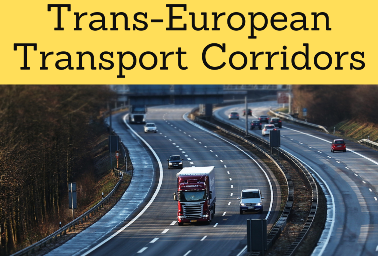
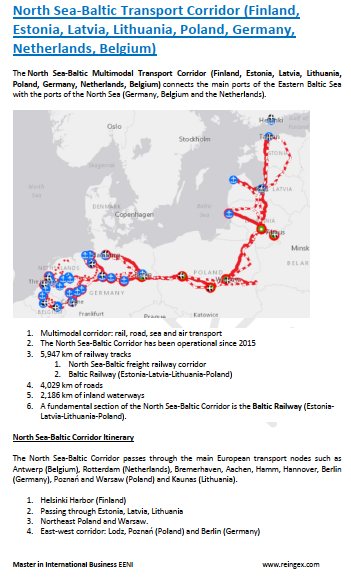
- North Sea-Baltic Corridor (Finland, Belgium)
- Baltic-Adriatic Corridor (Poland, Slovenia)
- Pan-European Transport Corridor II (Russia-Germany)
- Access to the
- Trans-Siberian Railway (Russia, Mongolia, China, North Korea)
- Pan-European Corridor IX
- Eurasian Land Transport Initiative
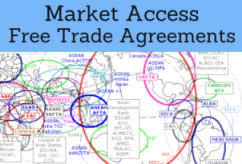
Polish Preferential Access and Trade Agreements:
- Poland and the European Economic Area
- European Union
- European Customs Union
- European Single Market
- The European Union Services Directive
- European Digital Single Market
- As a member of EU, Poland is a beneficiary of EU Free trade agreements
- Council of the Baltic Sea States
- Central European Initiative
- Regional Cooperation Council
- Organization of the Black Sea Economic Cooperation (observer country)
Sample:
- World Trade Organization (WTO)
- Agreement on Trade in Services (GATS)
- Agreement on Sanitary Measures
- Agreement on Technical Barriers to Trade
- Agreement on Preshipment Inspection
- Agreement on Safeguards
- Trade Facilitation Agreement
- World Customs Organization (WCO)
- Kyoto Convention
- Convention Harmonization of Frontier Controls of Goods
- Organization for Cooperation between Railways (OSJD)
- COTIF Convention
- BIC (Containers)
- Chicago Convention (ICAO)
- International Maritime Organization (IMO)
- Convention for Safe Containers
- Istanbul Convention
- Customs Convention on Containers
- CMR Convention
- Rotterdam Rules (Maritime Transport)
- CIM & CIT Rules (Rail Transport)
- International Road Transport Union (IRU)
- TIR Convention
- Guidelines on Safe Load Securing for Road Transport
European Organizations:
- European Union
- European Central Bank
- European Investment Bank
- Group of States of the European Council Convention against Corruption
- Economic Commission for Europe (UNECE)
- Organization for Security and Cooperation in Europe (OSCE)
- World Trade Organization (WTO)
- World Bank
- Asia-Europe Meeting
- OECD
- OECD anti-corruption measures
- International Monetary Fund
- United Nations
- The Republic of Poland (Europe) has a population of 38.5 million people (34th largest in the world)
- Borders of Poland: Lithuania, Belarus, Ukraine, the Czech Republic, Slovakia and Germany
- Polish Capital: Warsaw
- Official Language of Poland: Polish
- Polish Area: 312,685 km²
- Polish Government: Parliamentary Republic
Religion in Poland: Catholicism (Christianity).
Poland belongs to the European Economic Area.
Polish Economy.
- Poland is the largest market in Central Europe and the eighth largest European market
- An important privatization and economic liberalization process (1990s)
- GDP
- Agriculture: 4.6%
- Industry: 28.1%
- Services: 67.3%
- Polish Currency: Zloty
- Headquarters of the European Border and Coast Guard Agency (Frontex): Warsaw (Poland)
Polish Foreign Trade
- Top Polish exports destinations are Germany, Italy, France, the UK, the Czech Republic, Russia, the Netherlands, Ukraine, Sweden, and Hungary
- Main Polish exports: transport equipment, semi-manufactured products and foods
- Main origins of Polish imports: Germany, Russia, Italy, France, the Czech Republic, the Netherlands, the UK, Belgium, South Korea
- Headquarters of the Organization for Cooperation between Railways (OSJD)
(c) EENI Global Business School (1995-2025)
Top of this page
