Economic Commission for Asia (ESCAP)





 WhatsApp
Economic and Social Commission for Asia and the Pacific (ESCAP), United Nations
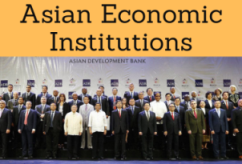
The Economic and Social Commission for Asia and the Pacific (UNESCAP) works in:
- Poverty reduction in Asia and the Pacific region
- Managing effects of globalization (International Trade, Foreign Direct Investment) in the ESCAP economies
- Facing new social topics
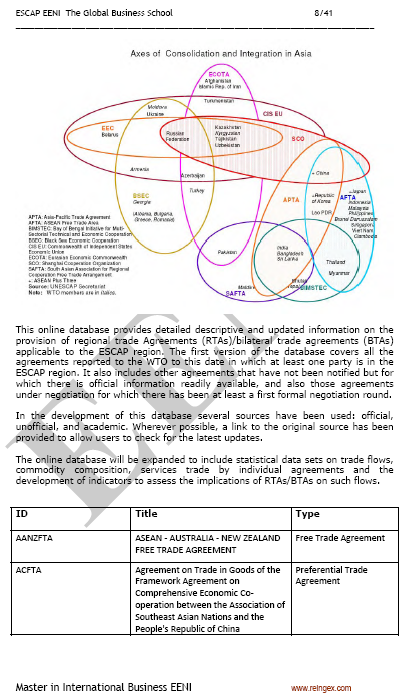
The Economic and Social Commission for Asia and the Pacific (ESCAP) region has experimented a fast increase in the number of Preferential Trade Agreements that has changed the scenery of Foreign Trade relations in the Asia-Pacific region and augmented the regional markets access difficulty.
- Introduction to the UN Economic and Social Commission for Asia and the Pacific (ESCAP)
- Objectives and Programs of the Economic and Social Commission for Asia and the Pacific (ESCAP)
- 2030 Agenda for Sustainable Development
- Committee on Macroeconomic Policy, Poverty Reduction and Financing
for Development
- Economic and Social Survey of Asia and the Pacific
- Economic Growth in Asia-Pacific
- Regional Economic Cooperation and Integration in the Asia-Pacific Region. Development policies
- Needs to enhance regional economic cooperation and integration in the Asia-Pacific Region
- Financing for development
- Asian Capital Markets
- Committee on Trade and Investment of the Economic and Social Commission for Asia
- APTIP Asia-Pacific Trade Indicators Portal
- Trade Facilitation and Paperless Trade in the Asia-Pacific region
- Expansion of trade across the Asia-Pacific Region
- Asia-Pacific Trade and Investment Report
- Asia-Pacific Research and Training Network on Trade (ARTNeT)
- Regional Trade Agreements in Asia
- Asia-Pacific Trade and Investment Agreement Database (APTIAD)
- Asia-Pacific Trade Agreement
- Services and Global Value Chains: The Asia-Pacific Reality, Studies in Trade, Investment and Innovation
- Sustainable Business and Investment
- Outward Foreign Direct Investment and Home Country Sustainable Development
- Committee on Transport
- Introduction to transport and logistics in the Asia-Pacific Region
- Asian Highway
- Trans-Asian Railway
- Marine Transport
- Dry Ports and Intermodal Transport Linkages
- Transport Facilitation
- Inter-Island Shipping
- Intelligent Transport Systems
- Statistical Yearbook for Asia-Pacific of the Economic and Social Commission for Asia and the Pacific (ESCAP)
- Regionalization in Asia
Sample - Economic and Social Commission for Asia and the Pacific (ESCAP)
The educational aims of the Subject “Economic and Social Commission of the UN for Asia and the Pacific (ESCAP)” are:
- To understand the goals (regional integration, Asian development) of the Economic and Social Commission for Asia and the Pacific (ESCAP)
- To analyze the role of the Committees on International Trade and Investment, and Transport
- To learn about importance of regional trade agreements in Asia (Asian Regionalization)
- To analyze Asian economy and main trade indicators
- To understand Trade Facilitation programs in the Asia-Pacific region


The Subject “Economic and Social Commission for Asia and the Pacific (ESCAP)” is included within the curriculum of the following academic programs at EENI Global Business School:
Masters: International Business, Foreign Trade.

Languages:  or
or  Comisión Económica y Social para Asia
  Commission économique et sociale pour l’Asie
  Economic Commission for Asia (ESCAP).
- Subject Credits “Economic and Social Commission of the UN for Asia and the Pacific”: 1

The UN Economic and Social Commission for Asia and the Pacific (UNESCAP) is the regional body of the UN for the Asia-Pacific region.
The mission of the Economic and Social Commission for Asia and the Pacific is to surpass the greatest defiance of Asia and the Pacific region.
- UNESCAP is located in Bangkok (Thailand)
- The Economic and Social Commission for Asia and the Pacific consists of 53 member countries and 9 associate members
- UNESCAP is the largest United Nations institution serving the Asia-Pacific region with over 600 staff
Regional bodies (Economic and Social Commission for Asia and the Pacific):
- Asian Centre for Agricultural Engineering and Machinery
- Asian Centre for Transfer of Technology
- Centre for Poverty Reduction through the Secondary Crops' Development in Asia and the Pacific
- United Nations Statistical Institute for Asia and the Pacific
The Member economies of the Economic and Social Commission for Asia and the Pacific (ESCAP) are Afghanistan, Armenia, Australia, Azerbaijan, Bangladesh, Bhutan, Brunei, Cambodia, Fiji, France, Georgia, India, Indonesia, Iran, Japan, Kazakhstan, Kiribati, Kyrgyz Republic, Laos, Malaysia, Maldives, Marshall Islands, Micronesia, Mongolia, Myanmar, Nauru, Nepal, Netherlands, New Zealand, North Korea, Pakistan, Palau, Papua New Guinea, Philippines, Russia, Samoa, Singapore, Solomon Islands, Sri Lanka, South Korea, Tajikistan, Thailand, East Timor, Tonga, Turkey, Turkmenistan, Tuvalu, UK, U.S., Uzbekistan, Vanuatu, and Vietnam.
The associate members are American Samoa, Cook Islands, French Polynesia, Hong Kong, Macau, New Caledonia, Niue, and the Northern Mariana Islands.
The Economic and Social Commission for Asia and the Pacific (ESCAP) is an inter-civilization agreement between the Sinic-Buddhist Civilization, Hindu Civilization, and Islamic Civilization.
(c) EENI Global Business School (1995-2025)
Top of this page
